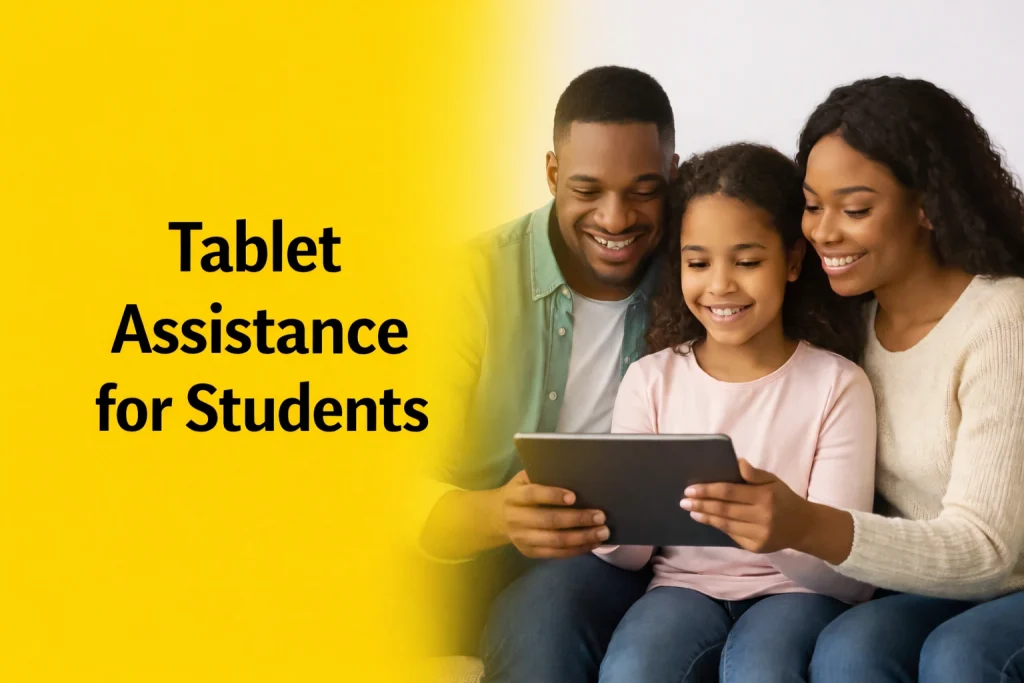
Tablet Assistance for Students
Access to a tablet can be an important part of a student’s education. Many school activities, homework assignments, research tools, and online learning platforms are easier to use on a tablet. While no federal agency directly distributes a free government tablet to every student, there are verified programs that help eligible families access devices through schools and nonprofit partners.
Understanding how tablet assistance works, who qualifies, and how to apply helps students and parents make informed decisions without falling for misleading claims.
Why Students May Need Tablet Assistance
For many families, buying a new device is not always affordable. Programs offering a free tablet for students are designed to support learning, not replace personal purchases. Tablets help students:
- Participate in online classes and assignments
- Access learning portals and digital textbooks
- Communicate with teachers and classmates
- Complete homework that requires internet-based tools
These programs exist to reduce learning gaps, especially for students from low-income households.
How Students Can Qualify for Tablet Assistance
Students may qualify for tablet support through income-based verification or school enrollment. Eligibility is often connected to household participation in assistance programs or school-based need assessments.
Common eligibility factors include:
- Enrollment in a public school, charter school, or college
- Household income within program limits
- Participation in programs like SNAP, Medicaid, or school meal assistance
- Residency within a supported district or service area
Qualification does not guarantee a device, but it may allow access to a free tablet through approved partners.
School District and Educational Programs
1. School Technology Distribution Programs
Some public school districts offer tablets directly to students who lack reliable access to a learning device.
- Devices may be loaned for the academic year or assigned for long-term use
- Priority is often given to students meeting income guidelines
- Applications are handled through schools, not outside vendors
2. College and University Support
Many colleges offer technology assistance through student services or financial aid departments.
- Students demonstrating financial need may access device loan programs
- Some institutions partner with nonprofits to help students obtain a free tablet for students enrolled in eligible programs
Nonprofit and Community Tablet Programs for Students
Most tablets provided to students come from nonprofit organizations, not directly from the government. These programs may use government benefit eligibility to confirm income, but the devices are distributed by nonprofits.
- Computers With Causes – Supports students and families through donated and refurbished devices
- PCs for People – Provides low-cost or free tablets to income-qualified households
- EveryoneOn – Connects students with affordable devices through local partners
- Human-I-T – Works with education and community programs to support digital access
- National Cristina Foundation – Distributes donated devices through schools and nonprofits
Some families refer to these opportunities as a free government tablet, but in reality, nonprofits handle distribution.
Documents Students May Need
To apply for tablet assistance, students or parents may be asked for:
- Proof of school enrollment
- Income or benefit verification
- Identification for the student or guardian
- Contact and address details
Legitimate programs do not require upfront payments or guaranteed approval fees.
Important Safety Notes
- Apply only through official school or nonprofit websites
- Avoid sites promising instant approval or guaranteed devices
- Be cautious with personal information
- Confirm that programs are connected to recognized organizations
A real free government tablet program does not operate through private sellers or unverified platforms.
Final Notes for Students and Families
Tablet assistance programs exist to support learning, not to replace personal purchases. Availability depends on funding, location, and eligibility. Families who understand how these programs work are better prepared to access a free tablet for students through legitimate channels.